
Maintaining Legacy Systems: Fortran, COBOL, and Other Vintage Technologies
By Idego Group
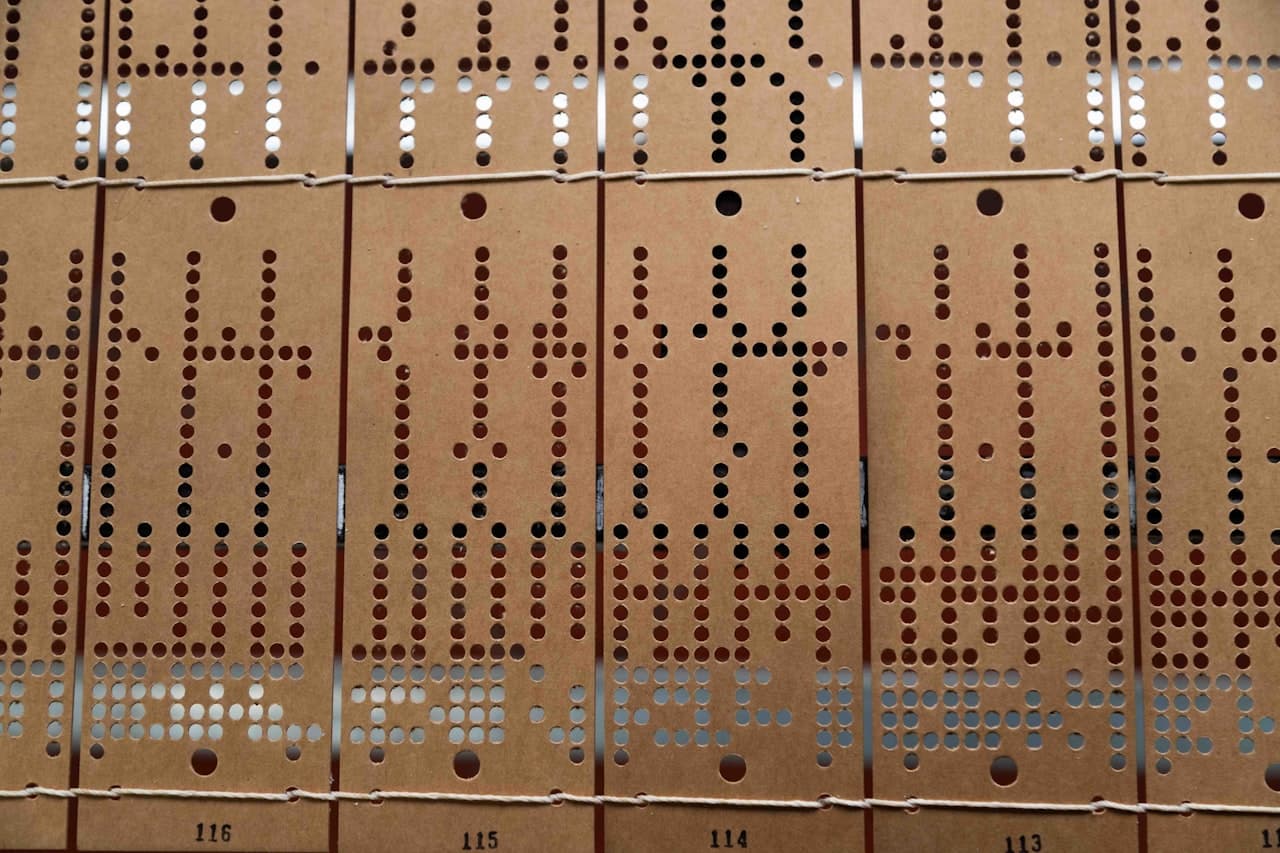
Many of the systems that quietly run our world were written long before today's developers entered the industry. Fortran, born in 1957, remains the backbone of scientific and engineering computation — climate models, computational fluid dynamics, nuclear simulations, and seismic processing all still depend on it. COBOL, almost as old, processes a remarkable share of global banking transactions, government records, payroll, and insurance claims. Beyond those two, PL/I still runs in mainframe shops, Pascal and Delphi power point-of-sale systems and industrial automation, classic Visual Basic 6 lingers in countless internal tools, and hand-written assembly still controls embedded devices that have been in service for decades.
These are not academic curiosities. Industry estimates put the global COBOL codebase at well over 200 billion lines, the majority running unattended in production every night. Voyager 1 and 2 — currently the most distant human-made objects in the universe — are still controlled by software written largely in Fortran and assembly in the 1970s. The IRS, the U.S. Social Security Administration, and most major airline reservation systems all still rely on mainframe-era code. These systems are the infrastructure of modern life.
Why Legacy Systems Survive
The cynical answer to "why are they still here?" is "because nobody dares replace them." The realistic answer is more nuanced.
A Fortran simulation refined over thirty years in aerospace or climate modelling carries an enormous amount of implicit knowledge — every numerical edge case, every workaround for a quirk in the original solver, every tweak validated against physical measurements. A COBOL batch job that closes a bank's ledger every night has been corrected one edge case at a time over decades, each fix reflecting a real-world incident. Throwing the code away means throwing away that institutional knowledge. Rebuilding it from scratch is rarely cheaper, faster, or safer than maintaining what already works.
Famous failed rewrites reinforce the lesson. Several large banks, government tax administrations, and airlines have collectively spent billions on modernization programmes that were eventually scaled back or abandoned. The cautionary tales follow roughly the same arc: underestimate the embedded business logic, hit unexpected integration constraints, run out of budget or political will, and revert to maintaining the legacy system anyway.
The Maintenance Reality
Teams supporting legacy stacks typically run into a recurring set of obstacles.
Specialists are scarce and getting scarcer. Most universities stopped teaching Fortran 77 or COBOL decades ago. The remaining experts are often within a few years of retirement, and the pipeline of replacements is thin. When a senior engineer leaves, they take with them context that no document captures.
Toolchains decay. Original compilers, build environments, and debuggers may only run on operating systems that are themselves out of support. A typical legacy build pipeline depends on a specific compiler version from a vendor that no longer exists, running on a server release that lost security patches years ago.
Tests are usually missing. Most legacy systems predate the era when automated testing was standard. Quality assurance was performed manually, often by domain experts who knew which numbers should appear in which report. Once those people retire, the system effectively becomes a black box that nobody can confidently change.
Tribal knowledge dominates. Critical assumptions live in the heads of a few long-tenured engineers, not in any document. "Don't ever run the month-end batch on the first business day after a leap year" is the kind of rule that exists nowhere except in someone's memory.
Integration is awkward. Modern systems have to talk to these stacks through whatever interfaces are available — flat files, fixed-width records, FTP drops at 3am, screen-scraping over 3270 terminal emulators, or vendor-specific binary protocols. Each interface is a source of fragility.
Data formats are not what you think they are. EBCDIC instead of ASCII, packed decimal instead of native integers, COBOL copybooks that overlay multiple record layouts onto the same bytes, Fortran COMMON blocks that silently share memory across subroutines, mixed-endian binary dumps from old Unix workstations — a "simple" data extract is rarely simple, and a single misinterpreted byte can corrupt millions of records before anyone notices.
A Practical Playbook
There is no single right answer, but a few approaches consistently work in practice.
1. Make the system observable before changing anything. Add logging, monitoring, and reproducible builds. Capture current behaviour in characterization tests — tests that record actual outputs against known inputs, regardless of whether that behaviour is strictly correct. This is the inversion of conventional TDD: in legacy systems you treat the existing implementation as the oracle, then refactor under that safety net. Without this step, every change is a guess.
2. Stabilize the toolchain. Get the build into a container or a virtual machine that you control. Pin compiler versions. Move the source code into modern version control if it isn't already. Make sure a clean checkout can produce a working binary on a freshly provisioned machine — without that, the system is one disk failure away from being unrecoverable. Open-source replacements like GnuCOBOL, GFortran, or Free Pascal can sometimes substitute for retired commercial compilers, but only after careful equivalence testing.
3. Wrap, don't replace. Expose the legacy core through a thin modern API — REST, gRPC, or a message queue — so new functionality can be built around it in modern languages. The wrapper acts as an anti-corruption layer that translates between the legacy data model and the modern one. This is the foundation of the strangler fig pattern: you migrate piece by piece, retiring parts of the old system only after the replacement has been validated in production.
4. Document aggressively, especially the why. Source code answers what the system does. Decisions, trade-offs, and historical incidents tell the next engineer why it does it that way — and that context is exactly what disappears when senior staff leave. Architecture Decision Records, runbooks for every recurring operational task, and short narrated walkthroughs of complex modules pay for themselves many times over.
5. Pair retiring experts with the next generation. Treat staffing as a strategic risk, not an HR problem. Pair seniors with juniors on real maintenance work, not training exercises. Have the senior narrate their reasoning out loud. Record those sessions if you can. The goal is to convert the most expensive form of organizational knowledge — what is in someone's head — into the cheapest form: what is written down.
6. Modernize at the edges first. The riskiest part of a legacy system is its core business logic. The least risky parts are usually the input/output edges — file imports, report generation, user interfaces, integrations. Start there. Replace the green-screen UI with a modern web frontend. Convert flat-file imports into event-driven pipelines. Each successful edge replacement builds organizational confidence and removes one more constraint, without touching the irreplaceable core.
7. Plan a graceful exit, not a heroic rewrite. If the system is to be retired, do it on a multi-year horizon with clear off-ramps. Identify business processes that can be moved to a modern platform. Identify processes that genuinely require the legacy system. Reduce scope until what remains is small enough to be rewritten safely — or to be maintained indefinitely as an isolated component.
Data and Integration Pitfalls Worth Highlighting
Most modernization projects underestimate the data layer. A few specific traps come up over and over again.
Character encoding mismatches are silent killers. EBCDIC and ASCII collate differently, so a sort that worked correctly on the mainframe will produce subtly wrong results once the data is copied to a Linux box — and the bug may not surface until a customer complains months later. Numeric formats are equally treacherous: COBOL's packed decimal stores two digits per byte and is not directly interpretable by any modern language without explicit conversion. Fortran code that uses COMMON blocks shares memory regions across subroutines in a way that is invisible to static analysis tools — refactoring such code without understanding the shared layout is a guaranteed way to introduce nondeterministic bugs.
When integrating with these systems, treat every interface as untrusted, even if it has been "stable" for twenty years. Add schema validation at the boundary. Log every record that fails. Never assume that the field at byte offset 47 is what the documentation says it is — verify it against production data.
The Economic Case
Maintaining a legacy system is rarely glamorous, but it is often the most rational economic choice. A successful rewrite is expensive and risky; a failed rewrite is catastrophic — sometimes existentially so for the organization. Disciplined maintenance, paired with gradual modernization at the edges, usually delivers more value per dollar than a big-bang rewrite, and keeps the lights on while longer-term decisions are made.
The right question is rarely "rewrite or maintain?" It is: "which parts of this system genuinely need to change in the next three years, and what is the cheapest path to that outcome that does not endanger production?" Framed that way, modernization stops being a binary decision and becomes an ongoing portfolio of small, reversible bets.
Closing
The systems written in Fortran, COBOL, and their contemporaries are not relics. They are working infrastructure, and in many cases they are doing their job better than anything that has been proposed to replace them. Treating them with the same care and discipline that you would give to any other production system — observability, tests, version control, documentation, succession planning — is what keeps them running for the next decade.
The goal is not to preserve the past for its own sake. It is to give the business the freedom to choose its next move on its own terms, rather than being forced into a panicked rewrite when the last person who understood the system finally walks out the door.